

Manufacturing Execution and Material Planning
Bills of material, routings, work orders and material planning configured and proven together — so the plan the system produces is one the shop floor can actually run.
Client
Discrete Manufacturing Group
Industry
Manufacturing · Production Planning
Duration
7 months
Year
2024
Background
Production planning ran on spreadsheets maintained alongside the ERP rather than inside it. Bills of material existed in the system but were not trusted, so planners rebuilt requirements by hand each cycle; work orders were tracked on paper between operations, and finished goods were reconciled against plan days after the run. The gap between what the system said was in progress and what was physically on the floor was wide enough that nobody used the system to make decisions.
The Challenge
Manufacturing is where an ERP’s data quality stops being an accounting problem and starts stopping production. A bill of material with the wrong component quantity does not produce a warning — it produces a shortage three weeks later. Routings that do not match how the floor actually works produce schedules operators quietly ignore. Every structure had to be validated against physical reality before planning could be switched on, and the planning run itself had to be tested against real demand and capacity rather than clean sample data.
Our Solution
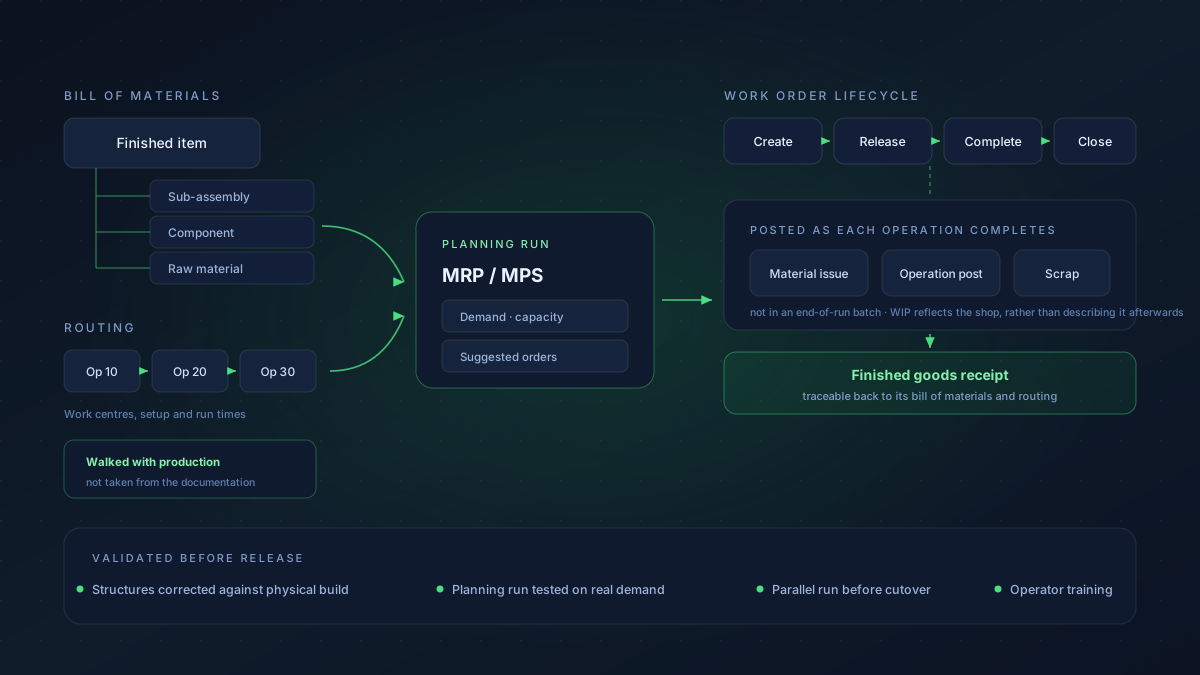
SageWare configured and validated the manufacturing flow end to end in Sage X3. We rebuilt bills of material and routings against how products are genuinely made, walking each structure with production rather than accepting the documented version, then configured the work order lifecycle so shop-floor transactions post as operations complete rather than in a batch at the end. Material and master production scheduling runs were tested against real demand and capacity scenarios, with the resulting requirements reconciled against expectations before the planning function was released to users. WIP tracking ties every work order from its bill of materials and routing through to finished goods receipt, and manufacturing, warehouse and planning issues were worked jointly with those three teams rather than handed between them.
Key Deliverables
- Bills of material and routings validated against physical production, not documentation
- Work order lifecycle posting transactions as operations complete rather than in batch
- MRP and MPS runs tested against real demand and capacity before release to planners
- WIP visibility linking every work order from components through to finished goods
Results & Impact
How We Did It
01
Structure Validation
Walked every bill of material and routing with production staff against how products are physically made, correcting quantities, operations and work centres before anything downstream was configured.
02
Work Order Lifecycle
Configured work order creation, release, operation completion and closure so shop-floor transactions post as work happens rather than in an end-of-run batch.
03
Planning Run Testing
Executed MRP and MPS against real demand and capacity scenarios, reconciling generated requirements and suggested orders against planner expectations.
04
Floor Rollout & Training
Ran the flow in parallel with existing practice, trained operators and planners on the transactions they own, and cut over once shop-floor and system stock agreed.
Decisions & Trade-offs
Walk every structure with production rather than trust the documentation
The documented bill of materials and the one the floor actually builds to had drifted, as they always do. Re-walking each structure with the people who assemble the product is slow, it is unglamorous, and it surfaces disagreements between engineering and production that nobody wanted to reopen. It is also the only way to avoid configuring a planning engine on top of quantities that were wrong before we arrived — and a bill of materials with the wrong component quantity produces a shortage three weeks later, not an error message.
Post operations as they complete, not in an end-of-run batch
Batch posting at the end of a run is fewer transactions and less for operators to do. It also means work-in-progress is a guess for the duration of the run, which is exactly when someone needs to know where the order is. We moved posting to operation completion, accepting more transactions on the floor and more training, in exchange for WIP that reflects the shop rather than describing it afterwards.
Prove the planning run before handing it to planners
A planner who receives one implausible MRP suggestion stops reading the rest, and the spreadsheet comes back permanently. We ran material and schedule planning against real demand and capacity scenarios and reconciled the generated requirements against what experienced planners expected, resolving the differences before the function was released rather than after. The credibility of the first run determines whether there is a second.
Scope & Boundaries
We covered production planning and shop-floor execution. Product design data upstream of the bill of materials remained in the client’s PLM process, and quality inspection was configured to record results but not to enforce gating — that was a deliberate phase-two decision by the operations team.
Next Case Study
Procure-to-Pay: Automated Three-Way Match
Procurement · Supply Chain Finance